I grew up eating luchi, a round, deep-fried pastry, eaten as bread in Bengali homes. Its cousin, puree, is more common in India. The difference between the two is luchi is made with refined (all-purpose) flour, while puree is made with whole-wheat flour. So luchi is white, while puree is brown. Furthermore, luchi is generally rolled out thinner.
I prefer luchi, even though puree is healthier. How about you? Have you eaten either?
Tuesday, June 16, 2009


Monday, June 08, 2009
Shrimp in mustard sauce: An explosion of flavor
Yesterday, I had a taste of a quintessentially Bengali preparation after a long while -- sorshe chingri bhape, or steamed shrimp in mustard sauce. During this period of deprivation, I had survived on ready-to-eat packets of rajma masala (curried red beans), spicy vegetable curry, and tadka dal (tempered, or spiced, lentil). All this while, my family was away in Kolkata and I was busy with several things that I wanted to accomplish during my demanding 3-year-old daughter's absence.
On Sunday I got a jolt of the strong mustard sauce, an explosion of flavor I was dying for. My wife's preparation was intense. I had it for lunch as well as dinner. This experience was the one bright spot of my day.
On Sunday I got a jolt of the strong mustard sauce, an explosion of flavor I was dying for. My wife's preparation was intense. I had it for lunch as well as dinner. This experience was the one bright spot of my day.
Tuesday, June 02, 2009
Stewing or braising versus baking or serving with a sauce
One thing I noticed when I worked in restaurants or cafeterias in America was that chefs would often sauté a boneless breast of chicken and pour different kinds of sauces over it for a variety of dishes, e.g., chicken piccata. And, of course, I found baking and roasting as two of the most common cooking methods. As opposed to these methods, the Indian way of cooking mostly involves braising or stewing. In other words, the main ingredient (e.g., fish) would be first fried and set aside. Then spices would be sautéed and water added. Once the liquid starts boiling, the fish or vegetables would be added for a simmer. The cooking is done when the meat or vegetables have become tender and the liquid (or gravy) has thickened a bit.
Does anyone think otherwise? Comments welcome.
Does anyone think otherwise? Comments welcome.
Monday, May 25, 2009
A moment of reflection at the dinner table
This post isn’t about Bengali food; this post describes a moment in time, a fleeting thought about food, while eating on a hot summer’s night. (In the heat of the Mumbai summer, when sweat soaks you the moment you step away from air-conditioning or the ceiling fan, one hardly wants to cook. This is the only time of year when I cook only when absolutely necessary.)
As I ate a dinner last night that I had cooked, I ruminated. The house was empty and silent except for the rustle of a pest and the whir of the ceiling fans – my family was away in Kolkata, thanks to my daughter’s vacation.
I ate an Italian dinner: a chicken salad I made and some focaccia I had bought. For the chicken salad, I threw some cooked shredded chicken, sliced celery, crushed black olives, chopped onion, and a mixture of herbs into a pan, and sautéed them in olive oil. To add the tang of acid, I drizzled only a little white wine vinegar. I seasoned the salad, and lo and behold, a simple dinner for a hot summer’s night was ready.
As I ate my dinner in solitude, inhaling the smell of oregano and basil, one thought came to my mind. How different the flavors of the world’s cuisines are. The smell of herbs seemed so far removed from that of the garam masala and the Bengali paanch foron. But they all constitute human food: something that not only nourishes us, but delights us as well.
As I ate a dinner last night that I had cooked, I ruminated. The house was empty and silent except for the rustle of a pest and the whir of the ceiling fans – my family was away in Kolkata, thanks to my daughter’s vacation.
I ate an Italian dinner: a chicken salad I made and some focaccia I had bought. For the chicken salad, I threw some cooked shredded chicken, sliced celery, crushed black olives, chopped onion, and a mixture of herbs into a pan, and sautéed them in olive oil. To add the tang of acid, I drizzled only a little white wine vinegar. I seasoned the salad, and lo and behold, a simple dinner for a hot summer’s night was ready.
As I ate my dinner in solitude, inhaling the smell of oregano and basil, one thought came to my mind. How different the flavors of the world’s cuisines are. The smell of herbs seemed so far removed from that of the garam masala and the Bengali paanch foron. But they all constitute human food: something that not only nourishes us, but delights us as well.
Monday, May 18, 2009
Asafetida: A flavor bordering on odor
One of the flavors I have enjoyed since my boyhood days is hing, or asafetida. Its smell today reminds me of a childhood comfort food – toor dal. Hing is a strong-smelling, garlicky condiment. In fact, it can be used instead of garlic. When garlic is forbidden, e.g., on days of Hindu fasting, asafetida comes to the rescue. Just beware. For uncooked asafetida has a fetid odor; the dictionaries call the smell “obnoxious” or “foul.” The condiment is obtained from the resin of a plant of the parsley family.
The strong odor, though, becomes mild and pleasant – redolent of leek – when hing is sautéed in oil. In small quantities, it adds an undercurrent of distinctive flavor to dal, or lentil. My mother has always made urad dal and toor dal spiced with hing and fennel.
Asafetida may provoke extreme reactions, though. Dear reader, do you like the flavor of asafetida?
The strong odor, though, becomes mild and pleasant – redolent of leek – when hing is sautéed in oil. In small quantities, it adds an undercurrent of distinctive flavor to dal, or lentil. My mother has always made urad dal and toor dal spiced with hing and fennel.
Asafetida may provoke extreme reactions, though. Dear reader, do you like the flavor of asafetida?
Monday, May 11, 2009
Poor peanut, despair not
Peanut has a bad name. It has become a metaphor for something of little value. For instance, people say, “I get paid peanuts.”
Yet, peanuts are ubiquitously valuable. In many countries all over the world, roasted peanuts are a staple snack served with beverages. And people, perhaps under the influence of alcohol, love them and raise a toast to them: “May I have some nuts, please?” That’s a question frequently asked, glass raised, in bars when a bunch of drinking buddies are having the time of their life. And, at home, many of us resort to the humble peanut-butter and jelly sandwich when hunger strikes.
I love peanuts. I eat them as tea-time snack in the afternoon. And peanuts are used in several Indian dishes, including the upma, a dish made from sooji, or semolina. It’s a pan-Indian favorite. I love my mother’s version, which I have grown up eating. For it, roasted or fried (if used raw) peanuts are chopped with a mortar and pestle. In India, another dish, chikki, is crammed with peanuts – or other nuts. It’s a sweet snack of nuts and molten jaggery, cut into squares, often sold in packets in grocery stores.
And remember peanut has a royal connection. Peanuts are a distinctive feature of one of China’s best-known dishes, kung pao chicken, which bears the name of a high-ranking officer of the Ching dynasty. The Szechwan preparation was created in his honor. (Some cooks substitute cashew for peanut, but that reflects merely a personal preference.)
Dear reader, do you like peanuts? (Of course, peanuts would be forbidden for those who are allergic to them.)
Yet, peanuts are ubiquitously valuable. In many countries all over the world, roasted peanuts are a staple snack served with beverages. And people, perhaps under the influence of alcohol, love them and raise a toast to them: “May I have some nuts, please?” That’s a question frequently asked, glass raised, in bars when a bunch of drinking buddies are having the time of their life. And, at home, many of us resort to the humble peanut-butter and jelly sandwich when hunger strikes.
I love peanuts. I eat them as tea-time snack in the afternoon. And peanuts are used in several Indian dishes, including the upma, a dish made from sooji, or semolina. It’s a pan-Indian favorite. I love my mother’s version, which I have grown up eating. For it, roasted or fried (if used raw) peanuts are chopped with a mortar and pestle. In India, another dish, chikki, is crammed with peanuts – or other nuts. It’s a sweet snack of nuts and molten jaggery, cut into squares, often sold in packets in grocery stores.
And remember peanut has a royal connection. Peanuts are a distinctive feature of one of China’s best-known dishes, kung pao chicken, which bears the name of a high-ranking officer of the Ching dynasty. The Szechwan preparation was created in his honor. (Some cooks substitute cashew for peanut, but that reflects merely a personal preference.)
Dear reader, do you like peanuts? (Of course, peanuts would be forbidden for those who are allergic to them.)
Tuesday, April 28, 2009
Watermelon sherbet a gift of summer
Last week I made a promise to you. This post is the fulfillment of it. I am going to share with you the recipe of a sherbet my mother made when I was growing up in India’s heartland, a region of unrelenting summers. This sherbet is made best with a watermelon that is dark red inside. The watermelons I pick in Mumbai – these have never disappointed me – are light green, with dark green stripes. These are unspeakably red and luscious inside, with small, sparse seeds.
Ingredients
½ of a small (3 lb) watermelon
3 tbsp castor (superfine) sugar
1 lemon or lime
3 cups water
A few mint leaves for garnish
Ice cubes
Method
Ingredients
½ of a small (3 lb) watermelon
3 tbsp castor (superfine) sugar
1 lemon or lime
3 cups water
A few mint leaves for garnish
Ice cubes
Method
- Cut watermelon into wedges.
- Grate them roughly over a flat grater placed over a large bowl (choose a size just large enough for the grater to rest on the edge of the bowl) to catch the juice and pulp, discarding the seeds from the top with a fork.
- Stir in the sugar and water.
- Squeeze a slice of lemon or lime and stir.
- Put ice cubes in tall glasses and pour the sherbet. Garnish with a slice of lemon or lime, or mint leaves.
Makes four glasses.
Monday, April 20, 2009
Bounty of summer a silver lining
Summer is here. The torrid, cruel days of April are upon us in India. This is the time of year when vegetables lose their winter sheen and begin to wear a half-withered look; some show up in faded colors. The orange carrots give way to yellow ones, for instance.
But, summer is not all evil. For in this season, some of the juiciest, tastiest, and loveliest fruits show up in the grocery stores and farmers’ markets. Among them are mangoes and watermelon. Several varieties of these fruits flood the market. The watermelons come in light green with stripes or solid dark green; ripe mangoes come in yellow, red, orange, and light green.
Whatever colors or shapes the fruits don, they nourish and cool us with their sweet flesh and juice as though God has created them to respite us from the cruelty of April. The watermelon, especially, quenches our thirst with a delightful color, flavor, and sweetness. Next time, I will share a recipe for fresh watermelon sherbet.
Dear reader, what summer fruits do you like most?
But, summer is not all evil. For in this season, some of the juiciest, tastiest, and loveliest fruits show up in the grocery stores and farmers’ markets. Among them are mangoes and watermelon. Several varieties of these fruits flood the market. The watermelons come in light green with stripes or solid dark green; ripe mangoes come in yellow, red, orange, and light green.
Whatever colors or shapes the fruits don, they nourish and cool us with their sweet flesh and juice as though God has created them to respite us from the cruelty of April. The watermelon, especially, quenches our thirst with a delightful color, flavor, and sweetness. Next time, I will share a recipe for fresh watermelon sherbet.
Dear reader, what summer fruits do you like most?
Tuesday, March 24, 2009
Aloo bhate and mashed potato: Close cousins
I grew up eating “aloo bhate,” a version of mashed potato born in the Bengali home. Bengalis eat this on a regular basis as a side dish. The name, I am told, comes from “bhate,” which means “in the rice.” People in an earlier generation used to drop whole, unpeeled potatoes into a pot of rice cooking on the stovetop to make this dish.
There are a few differences between the Western mashed potato and aloo bhate: the fat used, the condiments added, and the shape (aloo bhate is cupped into a ball). The basic aloo bhate is made with potatoes mashed with mustard oil and seasoned with just salt. Some people add roasted or fried crushed red pepper or chopped green chilies, some even caramelized onion. The Western mashed potato, I learned in adulthood, is made with butter, and milk or cream, and seasoned with salt and pepper. The more creative cooks add garlic sautéed in the butter. The more health-conscious (or lovers of olive oil) avoid butter; they use extra virgin olive oil instead.
One thing is common to both mashed potato and aloo bhate: they are delicious and homey. Both are simple but satisfying. Both can be made sophisticated, however, by merely adding the richness of cream or the tang of condiment.
Dear reader, do you like mashed potato?
There are a few differences between the Western mashed potato and aloo bhate: the fat used, the condiments added, and the shape (aloo bhate is cupped into a ball). The basic aloo bhate is made with potatoes mashed with mustard oil and seasoned with just salt. Some people add roasted or fried crushed red pepper or chopped green chilies, some even caramelized onion. The Western mashed potato, I learned in adulthood, is made with butter, and milk or cream, and seasoned with salt and pepper. The more creative cooks add garlic sautéed in the butter. The more health-conscious (or lovers of olive oil) avoid butter; they use extra virgin olive oil instead.
One thing is common to both mashed potato and aloo bhate: they are delicious and homey. Both are simple but satisfying. Both can be made sophisticated, however, by merely adding the richness of cream or the tang of condiment.
Dear reader, do you like mashed potato?
Tuesday, March 17, 2009
Grilling on a chulha
When I was a child, I used to see my mother prepare rotis (a roti is also called chapati, the Indian flatbread) on a chulha, a charcoal-fired furnace made from a steel bucket lined with clay. On the chulha also went vegetables, like eggplant, for roasting. Little did I know then that the chulha was very close to a grill.
Years later, well into adulthood, I saw a grill being used in the United States. As I passed by fast-food restaurants, the smell of meat and poultry being grilled or roasted filled me. It became an integral part of America in my mind.
Recently, I learned about how well-known food writer Mark Bittman prepares chapatis on his grill. As I read the recipe, I felt as though life had come back full circle – from my mother’s kitchen to the pages of the New York Times.
The chulha can rival a grill any day. Unfortunately, the once-ubiquitous chulha has all but disappeared from Indian homes, thanks to the advent of LPG. Soon, the chulha will be a relic of the past.
Dear reader, if you have seen a chulha, do you miss it?
Years later, well into adulthood, I saw a grill being used in the United States. As I passed by fast-food restaurants, the smell of meat and poultry being grilled or roasted filled me. It became an integral part of America in my mind.
Recently, I learned about how well-known food writer Mark Bittman prepares chapatis on his grill. As I read the recipe, I felt as though life had come back full circle – from my mother’s kitchen to the pages of the New York Times.
The chulha can rival a grill any day. Unfortunately, the once-ubiquitous chulha has all but disappeared from Indian homes, thanks to the advent of LPG. Soon, the chulha will be a relic of the past.
Dear reader, if you have seen a chulha, do you miss it?
Wednesday, November 19, 2008
Raw garlic: Too strong to handle?
Over the past few months, I have been exploring Mediterranean cuisine. One difference I find between it and Indian cuisine is the way garlic is used. Often in Mediterranean dishes, garlic is used raw. For instance, in gazpacho, garlic is blended into a soup that is itself uncooked. Also, in a classic cucumber dip, finely chopped raw garlic, along with mint, gives the dish its distinctive flavor.
In Indian cuisine, on the other hand, garlic is generally not used uncooked except perhaps in pickles. Raw garlic can smell pungent to many Indian diners. Bengali cooks, for instance, think that even quickly sautéing helps to temper the sharp flavor. Frying or roasting, of course, imparts a nutty fragrance to the condiment.
How do you like your garlic, dear reader? Cooked or uncooked?
In Indian cuisine, on the other hand, garlic is generally not used uncooked except perhaps in pickles. Raw garlic can smell pungent to many Indian diners. Bengali cooks, for instance, think that even quickly sautéing helps to temper the sharp flavor. Frying or roasting, of course, imparts a nutty fragrance to the condiment.
How do you like your garlic, dear reader? Cooked or uncooked?
Monday, November 03, 2008
Cooking in Calcutta covered in newspaper
This post is a moment of pride. I am glad to report that Cooking in Calcutta was featured last month in an article on food blogs in The Telegraph. Thanks to all of you who read the blog and post messages. Read the article, “Hungry kya?”
Tuesday, September 09, 2008
Fish with tamarind paste, a homey pleasure
Recently, a recipe in The New York Times reminded me of macher tok, or sour fish, because the recipe listed tamarind as an ingredient. The dish, curried striped bass, brought to mind rui and katla, which are similar to bass. So, I decided to try it. It had basically the same ingredients – mustard seeds, turmeric, sugar, tamarind – but differed in a couple of respects: the Bengali version, at least the one in our home, doesn’t use onion and coriander leaves.
The New York Times version turned out to be good enough to eat, although I prefer my mother’s simpler version, which calls for lightly frying the fish before dropping it into the simmering sauce, rather than using straight. But, the point is that the recipe, written by a non-Indian for an American newspaper, had connected me to home and my mother’s cooking.
The New York Times version turned out to be good enough to eat, although I prefer my mother’s simpler version, which calls for lightly frying the fish before dropping it into the simmering sauce, rather than using straight. But, the point is that the recipe, written by a non-Indian for an American newspaper, had connected me to home and my mother’s cooking.
Monday, August 18, 2008
Cream of mushroom soup, flavored with garam masala
Last week, I talked about the simplicity of the Bengali garam masala; this week's post is a continuation of the same thread. This week, I present a cream of mushroom soup flavored with garam masala rather than with garlic and onion.
This is a strictly vegetarian version (unless you consider fungus as non-vegetarian; I think biologically fungus is a plant) of the cream of mushroom soup, which I became intimately familiar with when I lived in the United States, a decade ago. During those shoestring-budget days (as a graduate student), I often fell back upon a can of Campbell’s cream of mushroom soup (and bread) for dinner.
Here is a low-fat recipe (without cream, thickened with flour instead) for the soup with a Bengali touch:
Ingredients
1 lb. mushroom (almost any kind would do; I used white button)
2 oz. (or four tablespoons) butter, preferably unsalted
2 tablespoons all-purpose flour
1 litre (or 4 cups) milk
1 teaspoon Bengali garam masala (whole, dry-roasted, and ground)
Salt and pepper to taste
Method
This is a strictly vegetarian version (unless you consider fungus as non-vegetarian; I think biologically fungus is a plant) of the cream of mushroom soup, which I became intimately familiar with when I lived in the United States, a decade ago. During those shoestring-budget days (as a graduate student), I often fell back upon a can of Campbell’s cream of mushroom soup (and bread) for dinner.
Here is a low-fat recipe (without cream, thickened with flour instead) for the soup with a Bengali touch:
Ingredients
1 lb. mushroom (almost any kind would do; I used white button)
2 oz. (or four tablespoons) butter, preferably unsalted
2 tablespoons all-purpose flour
1 litre (or 4 cups) milk
1 teaspoon Bengali garam masala (whole, dry-roasted, and ground)
Salt and pepper to taste
Method
- Wipe the mushrooms with a damp cloth or paper towel, trim the bases of stems, and chop the mushrooms.
- Heat butter in pan and suate the mushrooms for a 2-3 minutes, until just softened.
- Add milk and simmer for 10 minutes, stirring once in a while.
- Stir in flour into a cup of cold water and add to the soup.
- Simmer for 5 more minutes and season with salt, pepper, and the garam masala.
- Serve hot with bread.
Serves 4-5
Cream of mushroom soup, a "classic" with a new flavor
Last week, I talked about the simplicity of the Bengali garam masala; this week's post is a continuation of the same thread. This week, I present a cream of mushroom soup flavored with garam masala rather than with garlic and onion.
This is a strictly vegetarian version (unless you consider fungus non-vegetarian; I think biologically fungus is a plant) of the cream of mushroom soup, which I became intimately familiar with when I lived in the United States, a decade ago. During those shoestring-budget days (as a graduate student), I often fell back upon a can of Campbell’s cream of mushroom soup (and bread) for dinner.
Anyway, here is a low-fat recipe (without cream, thickened with flour instead) for the soup with a Bengali touch:
Ingredients
1 lb. mushroom (almost any kind would do; I used white button)
2 oz. (or four tablespoons) butter
2 tablespoons all-purpose flour
1 litre (or four cups) milk
1 teaspoon Bengali garam masala (whole, dry-roasted, and ground)
salt and pepper to taste
Method
This is a strictly vegetarian version (unless you consider fungus non-vegetarian; I think biologically fungus is a plant) of the cream of mushroom soup, which I became intimately familiar with when I lived in the United States, a decade ago. During those shoestring-budget days (as a graduate student), I often fell back upon a can of Campbell’s cream of mushroom soup (and bread) for dinner.
Anyway, here is a low-fat recipe (without cream, thickened with flour instead) for the soup with a Bengali touch:
Ingredients
1 lb. mushroom (almost any kind would do; I used white button)
2 oz. (or four tablespoons) butter
2 tablespoons all-purpose flour
1 litre (or four cups) milk
1 teaspoon Bengali garam masala (whole, dry-roasted, and ground)
salt and pepper to taste
Method
- Wipe the mushrooms with a damp cloth or paper towel and chop them.
- Heat butter in pan and suate the mushrooms for a 2-3 minutes, until just softened.
- Add milk and simmer for 10 minutes.
- Stir in flour into a cup of cold water and add to the soup.
- Simmer for 5 more minutes and season with salt, pepper, and the garam masala.
Serves 4-5
Monday, August 11, 2008
The Bengali garam masala: Simple, yet elegant
Garam masala is perhaps as common in Indian cuisine as curry. But, there are several blends available in the market; even home-made ones vary from region to region or from home to home. The Bengali garam masala is a simple mixture or blend (often whole ingredients are used rather than ground) of three spices: cardamom, cloves, and cinnamon. Other garam masala blends usually contain at least two of these in addition to several spices, like cumin, coriander, and black pepper.
The Bengali garam masala has a sweet and nutty flavor because of the presence of cinnamon and cardamom and because of the absence of any minty or fennel-like flavors. A common way to add the garam masala to a dish is to sauté a mixture of the whole spices in oil or ghee at the beginning or to dry-roast the mixture, grind it, and sprinkle it on the dish as a finishing touch. Dry-roasting (on stovetop or oven) brings out the flavor, adding a nutty touch to it, and makes it easier to powder the mixture.
The Bengali garam masala has a sweet and nutty flavor because of the presence of cinnamon and cardamom and because of the absence of any minty or fennel-like flavors. A common way to add the garam masala to a dish is to sauté a mixture of the whole spices in oil or ghee at the beginning or to dry-roast the mixture, grind it, and sprinkle it on the dish as a finishing touch. Dry-roasting (on stovetop or oven) brings out the flavor, adding a nutty touch to it, and makes it easier to powder the mixture.
Tuesday, July 29, 2008
Mustard seed oil: Gaining wider acceptance?
In an earlier post I wrote about mustard oil, especially in regard to how it compares with olive oil. Mustard oil, I thought, hails from India – it’s a quintessentially Indian oil, as olive oil is essentially Mediterranean in origin.
Recently, though, I came across a mustard oil brand from Australia. And I am happy to note – from a brief New York Times article – that mustard oil is now being used as a specially flavored oil in the United States and other countries.
The brand mentioned in the article is Naturally from Nature (www.naturallyfromnature.com). Does any reader, in Australia or elsewhere, have any idea about this brand of mustard oil? How does this compare with Indian mustard oil?
Recently, though, I came across a mustard oil brand from Australia. And I am happy to note – from a brief New York Times article – that mustard oil is now being used as a specially flavored oil in the United States and other countries.
The brand mentioned in the article is Naturally from Nature (www.naturallyfromnature.com). Does any reader, in Australia or elsewhere, have any idea about this brand of mustard oil? How does this compare with Indian mustard oil?
Monday, July 21, 2008
Striking a relationship with your grocer – II
Over the past few months, I got a call twice from my old sabziwala, Ashok, in Kolkata. He called long distance to say hello to me in Mumbai, filling me with delight. For I was connecting again with my man in Kolkata, my grocer – no, the word doesn’t just do justice – my vegetable vendor, who brought his produce from rural Bengal.
Ashok sold the most tender and the best breed of cauliflower and okra and drumsticks and, in the summer, mangoes. He sold “ol” and yam and some obscure, quintessentially Bengali vegetables.
When I needed something special, like white onion or country tomatoes – not the hybrid variety – he would procure it for me from his farm or elsewhere. And often he would give away something free.
So, when he calls me, I feel happy and nostalgic. In Mumbai, I haven’t been able to forge such a relationship with any sabziwala.
Ashok sold the most tender and the best breed of cauliflower and okra and drumsticks and, in the summer, mangoes. He sold “ol” and yam and some obscure, quintessentially Bengali vegetables.
When I needed something special, like white onion or country tomatoes – not the hybrid variety – he would procure it for me from his farm or elsewhere. And often he would give away something free.
So, when he calls me, I feel happy and nostalgic. In Mumbai, I haven’t been able to forge such a relationship with any sabziwala.
Monday, July 14, 2008
The two faces of cardamom: One subtle, the other bold
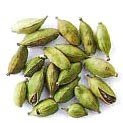
In an earlier post I wrote about home-made herbal tea. This post is about the nuances of cardamom – how two kinds of cardamom have two distinct flavors.
The two kinds are small and green, and large and black. A while ago, my mother and I tested the flavors of the two kinds in tea. We made the tea with identical leaves and the same method, but the tea sample with green cardamom had an aromatic, subtle flavor, while the one made with the large variety had a bold, smoky flavor. Our conclusion: they aren’t interchangeable.
 The large cardamom is used extensively in many Indian dishes, including fried rice and biryani. But, I wouldn’t use it in herbal tea; the green small ones are better for that use.
Yet, in the end, cardamom remains a mystery to me. When I went to Sikkim, a mountainous state in India’s Northeast, I drank flavorful black (without creamer/milk) tea from porcelain cups with heavy lids that looked like small pots. In the quaint eateries on the mountains overlooking the imposing Himalayan peaks, I found the aroma of cardamom tea unspeakably satisfying. I have no idea which cardamom the tea was infused with; all I know is the tea tasted unlike anything I had drunk before. Maybe it was the locale where the secret lay, where cardamom plants grew in the wild and where the mountains added their charm to anything we imbibed.
Dear reader, which cardamom do you prefer? Do you use both?
Monday, March 31, 2008
Where a rice pudding is ceremony and blessing
Few other Bengali desserts are more homey and ceremonial than payesh, or rice pudding. Payesh is something Bengali mothers cook on their sons’ birthdays; the son eats it as an offering from his mother or a food blessed by her.
Payesh, when perfectly made, is wonderfully creamy, smooth and custard-like, yet eggless. Today, my mother made a batch, complete with a sprinkling of chopped cashew nuts and plump raisins and flavored with bay leaves and cardamom.
I had asked her to teach me how to make it, but she made it when I was sleeping on a Sunday morning. Obviously, she didn’t have the heart to wake me up from my weekend slumber. Today was not my birthday, but I wanted to learn how to make it and eat it, too. I couldn’t watch her make it; here is the recipe as I heard it later. So, this is untested in a lab kitchen, but if you trust my mother, as I do, then go ahead and make it. Remember that the secret to great payesh is constant stirring and adding the sugar after the rice is tender.
Ingredients
1 quart (about 1 liter) whole milk
1 cup water
1/3rd cup sugar
3 bay leaves
1/4th cup flavorful (e.g., basmati) rice
1/4th cup cashew nut roughly chopped
1/4th cup raisins
6 small cardamoms, crushed
Method
Payesh, when perfectly made, is wonderfully creamy, smooth and custard-like, yet eggless. Today, my mother made a batch, complete with a sprinkling of chopped cashew nuts and plump raisins and flavored with bay leaves and cardamom.
I had asked her to teach me how to make it, but she made it when I was sleeping on a Sunday morning. Obviously, she didn’t have the heart to wake me up from my weekend slumber. Today was not my birthday, but I wanted to learn how to make it and eat it, too. I couldn’t watch her make it; here is the recipe as I heard it later. So, this is untested in a lab kitchen, but if you trust my mother, as I do, then go ahead and make it. Remember that the secret to great payesh is constant stirring and adding the sugar after the rice is tender.
Ingredients
1 quart (about 1 liter) whole milk
1 cup water
1/3
3 bay leaves
1/4
1/4
1/4
6 small cardamoms, crushed
Method
- Put half of the milk, bay leaves, rice, water, cashew nut, and raisins in a pot and bring to boil.
- Cook stirring until the rice is cooked, about 15 minutes, on low heat.
- Put the rest of the milk and sugar, and continue stirring until the milk thickens, about 15 minutes, on low heat.
- Add the cardamom, stir, and turn off the heat. Serve warm or chilled, garnished with a spring of mint or a swirl of thick honey.
Note: Grate nutmeg on top for a more complex flavor.
Subscribe to:
Posts (Atom)